
In professional UAV operations, the reliability of optical sensors is the cornerstone of mission success. When a high-precision Benewake lidar is integrated into a stabilized platform, it provides the critical distance data needed for terrain following, structural inspection, and precision landing. However, because these sensors operate by emitting infrared light and measuring its reflection, the physical condition of the sensor window directly impacts performance. A drone gimbal rangefinder exposed to dust, moisture, or industrial pollutants can experience signal attenuation, leading to increased noise or inaccurate distance readings.
Establishing a routine maintenance schedule is essential for any organization utilizing LiDAR technology in the field. Proper care not only ensures the highest level of measurement accuracy but also extends the operational lifespan of the hardware, preventing costly downtime during critical survey or inspection flights.
The Impact of Environmental Contaminants on LiDAR
During standard flight operations, drones often encounter various environmental stressors. In agricultural settings, pollen and chemical spray drift can coat the lens; in construction or mining zones, fine particulate dust is a constant presence. These contaminants can scatter the laser beam as it exits or enters the sensor housing.
When the optical window of a Benewake lidar becomes obscured, the signal-to-noise ratio decreases. This can manifest as a reduction in the maximum effective range or a loss of precision when measuring low-reflectivity surfaces. For a drone gimbal rangefinder tasked with maintaining a specific offset from a wind turbine blade or a power line, even a minor degradation in signal quality can compromise the safety of the aircraft. Regular inspections allow operators to identify and remove these obstructions before they impact flight control.
Best Practices for Optical Cleaning
Cleaning a high-performance optical sensor requires a gentle touch and the correct materials to avoid scratching the specialized coatings on the window. The following steps should be incorporated into every post-flight debrief:
Initial Dust Removal: A manual air blower or a soft-bristled lens brush is used to remove loose particles. Compressed air from high-pressure canisters should be avoided, as propellants can leave a residue and the pressure may force dust into the housing seals.
Wet Cleaning: If smudges or oily residues persist, a dedicated optical cleaning solution or high-purity isopropyl alcohol is applied to a microfiber lens cloth. The solution should always be applied to the cloth first, rather than sprayed directly onto the sensor.
Gentle Motion: The optical window should be wiped in a single direction or a gentle circular motion starting from the center and moving outward. Excessive pressure must be avoided to prevent micro-abrasions that can permanently scatter laser light.
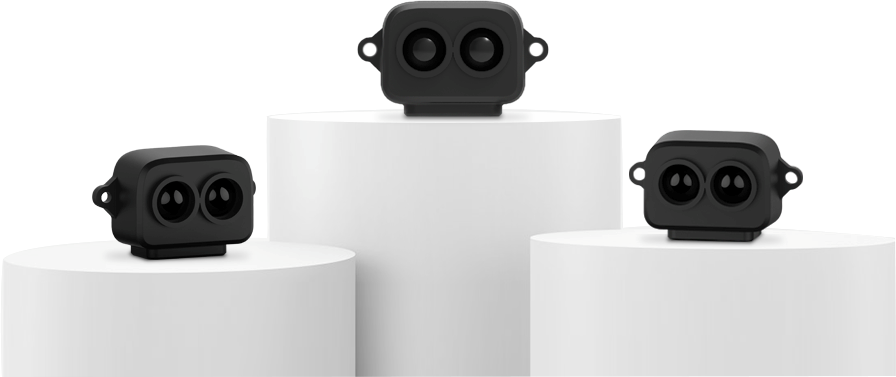
Featured Product: TF-Luna 8 m Low Cost LiDAR Distance Sensor
The TF-Luna is a single-point ranging LiDAR specifically engineered for high-stability performance in environments where payload and cost-efficiency are primary considerations. Based on the Time-of-Flight (ToF) principle, this sensor features unique optical and electrical designs that improve its resistance to ambient light. This makes it an exceptional choice for a drone gimbal rangefinder used in various industrial and consumer UAV applications.
Technical specifications for the TF-Luna include an effective operating range of 0.2m to 8m, providing reliable proximity data for low-altitude maneuvers and obstacle detection. It maintains an accuracy of plus or minus 6cm within the 0.2m to 3m range and plus or minus 2 percent for distances beyond 3m. With an adjustable frame rate up to 250Hz and an ultra-low power consumption of less than or equal to 0.35W, it offers a high-speed, energy-efficient solution for battery-powered platforms. The module is incredibly compact, with dimensions of 35mm * 21.25mm * 12.5mm and a weight of less than 5g, ensuring it can be integrated into small gimbals without affecting motor balance.
Mechanical Maintenance of the Gimbal Integration
Beyond the optical window, the mechanical integration of the Benewake lidar must be inspected regularly. The stabilized nature of a gimbal means that the sensor is constantly in motion relative to the drone frame.
Cable Integrity: The wiring harness is inspected for signs of wear or fraying, particularly at the pivot points of the gimbal. Constant bending can lead to internal wire fatigue, which might cause intermittent data loss during flight.
Mounting Rigidity: Operators should check that the mounting bracket remains secure. Any looseness in the hardware can introduce high-frequency vibrations that the gimbal’s stabilization algorithms may not be able to fully filter out, resulting in “jittery” distance data.
Connector Sealing: It is important to ensure that the electrical connections are free from corrosion. In coastal or humid environments, applying a small amount of dielectric grease to the connectors can help prevent oxidation and maintain a reliable data link between the LiDAR and the flight controller.
Long-Term Storage and Calibration
When the equipment is not in use, the UAV should be stored in a climate-controlled environment to prevent moisture buildup inside the sensor optics. If a drone gimbal rangefinder has been subjected to a significant mechanical shock or extreme temperature cycles, a ground-based verification test is performed. By measuring a known, fixed distance against a standard white target, operators can confirm that the Benewake lidar is still performing within its specified accuracy tolerances before returning to the field.
About Benewake
Benewake (Beijing) Co., Ltd. is a leading global provider of LiDAR sensors and Time-of-Flight solutions. The company is dedicated to providing the “eyes” for the autonomous era, offering a wide range of products that serve the logistics, robotics, and UAV industries. With a focus on technical innovation and environmental adaptability, Benewake empowers professional operators to achieve higher levels of safety and efficiency in complex industrial landscapes.
Protect your investment and ensure mission safety by maintaining your sensors to the highest standards. Explore the full range of Benewake’s high-precision LiDAR solutions to find the perfect fit for your next professional UAV deployment.

