
Custom Extruded Plastic for Infrastructure: How Specialist Profiles Serve Water, Gas, and Power Applications

Municipal utility networks require advanced polymer configurations to withstand hostile geological environments and high internal pressures across diverse geographic regions.
Civil infrastructure managers continuously seek structural reliability across diverse municipal utility installations spanning water transport, gas distribution, and electrical power transmission.
Specialized profile manufacturing transforms raw polymer pellets into durable, high-load conduits capable of enduring decades of sub-surface mechanical stress. Modern industrial lines execute precise thermal transformations that dictate the mechanical integrity of every single extruded meter delivered to job sites.
Operators overseeing municipal development projects prioritize material consistency and dimensional accuracy to prevent catastrophic failure in critical subterranean networks.
High-density polyethylene and polyvinyl chloride formulations undergo rigorous thermal conditioning to achieve exact profile tolerances required by international engineering standards.
Industrial equipment suppliers deliver integrated manufacturing solutions that maintain strict quality control parameters from raw resin feeding to final coiling. Understanding these specialized production methods illuminates how advanced polymer engineering underpins modern civil infrastructure expansion.
Segmental Pipe Geometries for Large-Diameter Culverts
Large-diameter drainage culverts demand structural architectures capable of resisting immense soil overburden and dynamic heavy traffic loads above ground. Utilizing custom extruded plastic profiles enables civil contractors to assemble high-strength segmental components designed for rapid interlocking field installation. Modular profile sections simplify underground transport logistics and reduce heavy crane requirements on congested urban construction job sites.
Engineers configure specialized forming dies to create hollow-ribbed structural walls that maximize bending stiffness while minimizing overall material weight per meter. Optimized cross-sections distribute external mechanical loads evenly across the entire circumference of the underground conduit under shifting soil conditions.
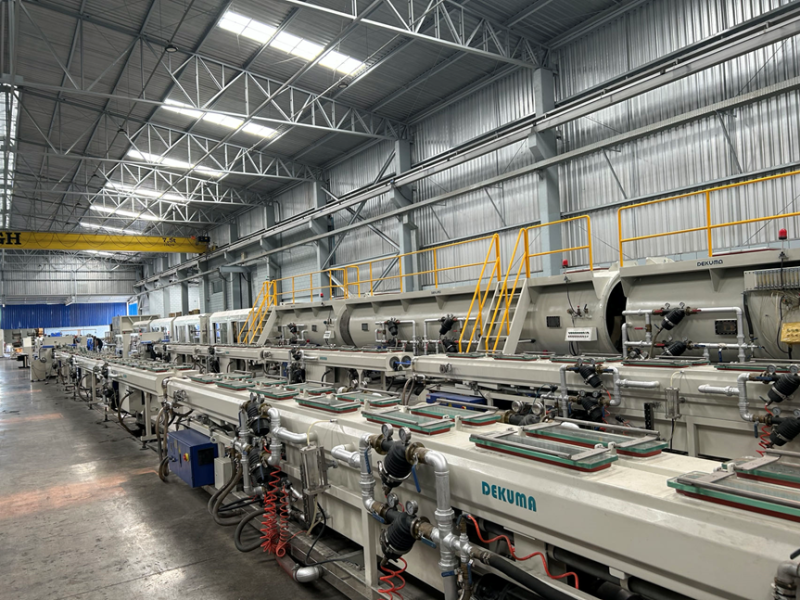
Heavy-duty cooling tanks stabilize these complex geometric configurations immediately after melt exit, preventing dimensional distortion during rapid water-cooling solidification stages.
Profiled Protective Conduits in Subsea Power Networks
Subsea power transmission cables require exceptional protection against corrosive marine environments, hydrodynamic currents, and high-pressure impacts on ocean floors. Specialized multi-layer profiles provide robust outer armoring and internal thermal stability for submarine electrical grid installations crossing deep channels. Heavy-duty extrusion lines process specialized engineering plastics that resist saltwater degradation and mechanical abrasion over extended operational lifespans lasting decades.
Rigid polymer conduits safeguard sensitive fiber optic data lines and high-voltage conductors bundled securely within subterranean and subsea trenches. Specialized cooling troughs and vacuum calibration units ensure uniform wall thickness across continuous kilometers of subsea tubing without structural weakness. Strict quality verification protocols detect micro-defects early, protecting multi-million-dollar subsea energy investments from premature environmental failure in hostile waters.
Structured Wall Pipes and Drainage Ring-Stiffness Mechanics
Drainage networks require high ring-stiffness conduits that resist crushing forces beneath heavy highway foundations and industrial storage yards. Deploying custom extruded plastic channels across high-load drainage zones prevents structural deformation under extreme soil pressure profiles. Corrugated profile designs combine smooth inner hydraulic surfaces with external ribbed reinforcements for optimal fluid flow capacity during peak storms.
Manufacturing these sophisticated drainage profiles requires precise synchronisation between extruder screw rotation speeds and downstream vacuum forming modules. Operators monitor melt pressure and cooling water temperature continuously to maintain uniform wall thickness across every structural rib. Reliable output consistency prevents localized weak points that could compromise underground drainage integrity over decades of continuous municipal service.
Advanced Tooling Requirements for Specialized Profiles
Specialized infrastructure profiles demand highly customized die heads and specialized calibration sleeves to shape molten polymer accurately under pressure. Selecting an appropriate extrusion pipe machine allows manufacturers to process high-viscosity resins into intricate geometric profiles without thermal degradation. Advanced screw designs eliminate shear-induced polymer breakdown, preserving the mechanical properties required for demanding utility applications globally.
Precision temperature control zones along the extrusion barrel prevent resin scorching and maintain stable melt viscosity throughout long production campaigns. Automated control systems monitor pressure differentials across the die head, alerting operators to potential flow anomalies before scrap generation occurs. Maintaining strict thermal equilibrium is vital for producing defect-free profiles that meet rigorous municipal engineering specifications.
Global Project Execution and Industrial Reliability
International civil infrastructure projects require manufacturing equipment capable of continuous, high-volume operation under diverse climatic conditions and power grids. Engineers at Dekuma collaborate closely with international utilities to deploy robust manufacturing lines tailored to regional production demands. Collaborative engineering partnerships ensure that local operators receive comprehensive training, maintenance support, and rapid spare parts availability.
Configuring an advanced extrusion pipe machine requires careful alignment of downstream cutting units, haul-off tractors, and coiling machinery. Synchronized line speeds prevent mechanical tension on warm polymer profiles, eliminating ovality defects and residual internal stresses. Factory automation systems integrate data logging capabilities, enabling plant managers to track energy consumption and throughput metrics in real time.
Material Optimization Across Municipal Infrastructure Sectors
Material science advancements enable manufacturers to incorporate recycled polymer blends into non-pressure structural layers without sacrificing core mechanical performance metrics.
Systems delivered by Dekuma support multi-layer co-extrusion technologies that bind virgin outer layers with reinforced recycled inner cores. Sustainable manufacturing practices reduce raw material expenditure while satisfying stringent environmental regulations governing municipal utility procurement.
Rigid laboratory testing protocols evaluate impact resistance, hydrostatic pressure tolerance, and environmental stress cracking propensity for every production batch leaving the factory.
Independent quality certifications validate that finished polymer profiles meet or exceed regional safety codes for drinking water distribution and gas transit. Rigorous testing regimens provide municipal buyers with absolute confidence in long-term infrastructure durability.
Certification Confidence and Global Market Expansion
Strategic investments in advanced manufacturing technology empower pipe producers to capture expanding market shares in municipal infrastructure development worldwide.
Global projects managed alongside Dekuma illustrate how engineering excellence drives industrial reliability and long-term operational profitability. Forward-thinking manufacturers continue to refine processing methodologies, ensuring that critical water, gas, and power networks endure for generations.
