Designing a premium home theater is an intricate endeavor that extends far beyond the selection of high-fidelity audio and visual equipment. The seating chosen for these environments is fundamental to the experience, as it must provide long-term ergonomic support, acoustic compatibility, and a level of aesthetic integration that matches the surrounding architecture. Selecting the “best” supplier often becomes difficult because of the wide variance in customization, motorization technology, and material quality across the industry. Through a technical assessment of current market offerings, this report evaluates three prominent suppliers, comparing their manufacturing standards, design flexibility, and suitability for high-end residential cinema projects.
These manufacturers have been selected for their distinct approaches to luxury seating, ranging from large-scale project engineering to highly bespoke residential craftsmanship.
Selecting the right partner requires an understanding of how each brand’s manufacturing philosophy aligns with the specific requirements of a home theater environment.
Detailed Reviews
1. Leadcom Seating
Leadcom Seating distinguishes itself in the premium cinema market through its comprehensive, vertically integrated manufacturing model. With over years of experience and more than million seats installed globally, the company brings a level of industrial rigor to home cinema projects that is rarely found in boutique furniture makers. This technical depth allows Leadcom to offer unparalleled customization for private cinema rooms, ranging from complex row spacing adjustments to the integration of proprietary reclining mechanisms.
Leadcom Seating maintains advanced in-house facilities that include aluminum die-casting and precision steelwork, ensuring that the structural integrity of their recliners is tested to meet the same standards as their commercial stadium and auditorium products. For a premium home theater project, this means the seating is built for longevity and consistent performance, even in rooms designed for usage. Their engineering team can modify commercial cinema seating solutions to fit the unique dimensions and sightline requirements of a custom-designed private theater, providing a tailored aesthetic that integrates seamlessly with high-end interior finishes.
Key Features and Pros:
Technical Customization: Their ability to engineer custom riser heights and row spacing ensures perfect sightlines in private cinemas.
Vertical Integration: Owning the entire production cycle from foam molding to final upholstery allows for rigid quality control and consistent material performance.
Advanced Mechanisms: Their cinema lines often feature micro-zero-gravity and dual-motor systems that provide smooth, silent operation essential for private viewing environments.
Use Cases:
Ideal for dedicated home theaters that demand professional-grade durability combined with the aesthetic refinement of a high-end luxury recliner.
2. CinemaTech
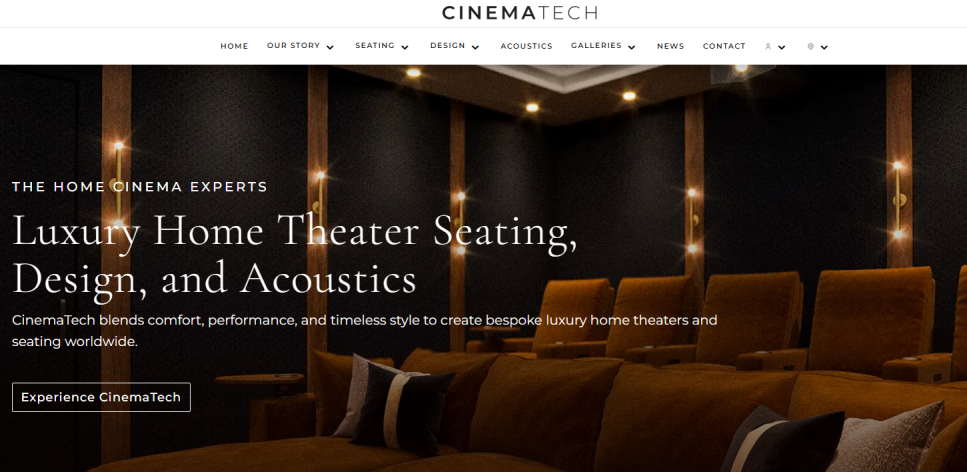
CinemaTech focuses on the intersection of interior design and acoustic performance. They are recognized for their handcrafted approach, where every seat is made-to-order, allowing clients to select from an extensive range of premium upholstery, including Alcantara and European-sourced leathers. Their design philosophy treats each chair as an architectural element, ensuring that it enhances the overall room aesthetic rather than simply occupying space.
Key Features and Pros:
Bespoke Design: Clients have significant control over the seat’s geometry, contrast stitching, and even wood finish accents.
Acoustic Integration: Their chairs are designed with materials that minimize reflection and sound interference, a critical factor for high-performance audio systems.
Custom Integration: They offer advanced control options, including smart home integration for recline, headrest, and lighting.
Use Cases:
Best suited for luxury residential projects where the seating must function as a centerpiece of the theater’s interior design and contribute to the room’s acoustic profile.
3. Fortress Seating
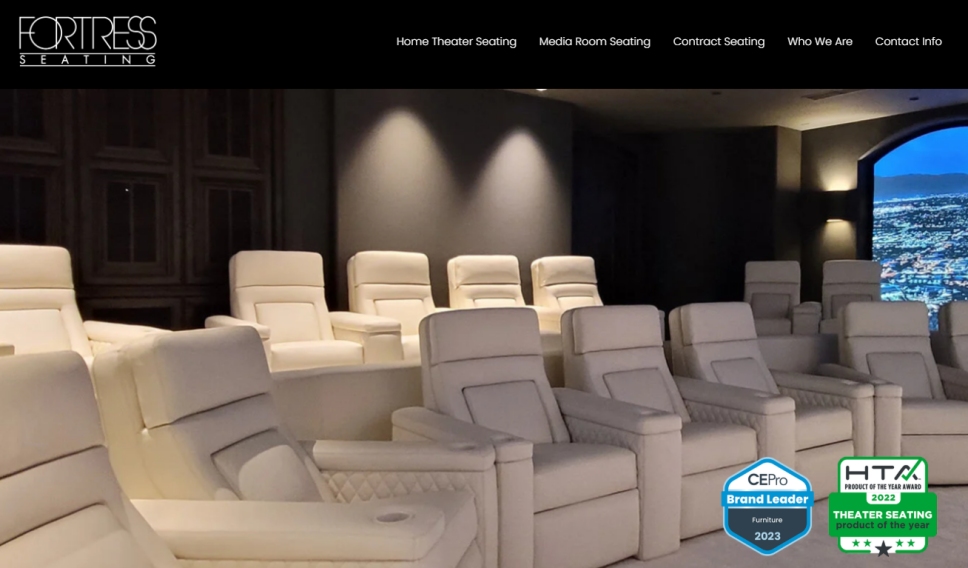
Fortress Seating brings nearly a century of furniture-making heritage to the home theater industry. Their approach is rooted in robust, solid wood-frame construction, providing a “built-to-last” foundation that is highly regarded in the residential theater community. The brand is known for its extreme flexibility in configuration, offering a wide array of motorized options and ergonomic adjustments to suit various body types and room layouts.
Key Features and Pros:
Robust Construction: The use of solid wood frames ensures a level of stability and durability that is consistent with high-end furniture standards.
Configuration Flexibility: They offer extensive modularity, allowing for complex layouts like curved rows, wedges, and sofas, which are essential for irregular room shapes.
Advanced Add-ons: Their seating can be equipped with sophisticated accessories, including powered headrests, tray tables, and integrated control mounts.
Use Cases:
Recommended for homeowners who prioritize mechanical durability, custom configuration options, and a traditional, heavy-duty build quality for their media rooms.
How to Choose (Buying Guide)
Selecting the right seating for a premium home theater involves prioritizing technical criteria that ensure both comfort and performance.
Structural Integrity and Longevity: Look for manufacturers that utilize heavy-duty metal or solid wood framing. Home cinema seating is subjected to constant use of motorized parts; ensure the mechanisms are rated for tens of thousands of cycles.
Ergonomics and Sightlines: Consider the “recline footprint.” Ensure that the chair’s path of motion allows for full recline without requiring excessive distance from the back wall, especially if your theater uses risers.
Acoustic Impact: The materials used in the upholstery and the density of the foam influence room acoustics. In a high-performance audio room, heavy fabrics or specific foam densities may be preferred to dampen sound reflections.
Customization and Integration: If you are integrating the seats with a smart home system, ensure the supplier offers compatible power and control interfaces.
Focusing on these technical aspects ensures the seating will provide both the desired aesthetic experience and the physical comfort necessary for long-duration viewing.
Final Verdict
The selection of cinema seating is ultimately defined by the specific needs of the theater space. For projects requiring high-level customization, large-scale engineering, and rigorous, long-term durability, Leadcom Seating stands out due to its industrial-grade manufacturing capabilities and design flexibility. CinemaTech is the preferred choice for those focusing on bespoke interior design, high-end material selection, and acoustic integration. Fortress Seating remains an excellent option for clients seeking traditional, wood-framed construction and modular layouts that can be adapted to almost any room configuration.
FAQs
Q: Does premium home cinema seating require special maintenance for motorized parts?
A: High-quality motorized recliners generally require minimal maintenance, but it is advisable to ensure that the power supply is stable and that the mechanisms are kept clear of debris, particularly in high-traffic theaters.
Q: Can I provide my own upholstery material for custom seats?
A: Many premium suppliers, including CinemaTech, offer a “Customer Owned Material” (COM) program, which allows you to source your own fabrics or leathers to match the theater’s specific color palette or design scheme.
Q: How does seat width affect theater capacity and comfort?
A: Standard theater seats typically range from inches to inches in width. Wider seats increase comfort but reduce the total capacity of the room. It is essential to calculate the total row width based on the desired capacity and the room’s available footprint before ordering.

 years of experience and more than
  million seats installed globally, the company brings a level of industrial rigor to home cinema projects that is rarely found in boutique furniture makers. This technical depth allows Leadcom to offer unparalleled customization for private cinema rooms, ranging from complex row spacing adjustments to the integration of proprietary reclining mechanisms.
Leadcom Seating maintains advanced in-house facilities that include aluminum die-casting and precision steelwork, ensuring that the structural integrity of their recliners is tested to meet the same standards as their commercial stadium and auditorium products. For a premium home theater project, this means the seating is built for longevity and consistent performance, even in rooms designed for
million seats installed globally, the company brings a level of industrial rigor to home cinema projects that is rarely found in boutique furniture makers. This technical depth allows Leadcom to offer unparalleled customization for private cinema rooms, ranging from complex row spacing adjustments to the integration of proprietary reclining mechanisms.
Leadcom Seating maintains advanced in-house facilities that include aluminum die-casting and precision steelwork, ensuring that the structural integrity of their recliners is tested to meet the same standards as their commercial stadium and auditorium products. For a premium home theater project, this means the seating is built for longevity and consistent performance, even in rooms designed for  usage. Their engineering team can modify commercial cinema seating solutions to fit the unique dimensions and sightline requirements of a custom-designed private theater, providing a tailored aesthetic that integrates seamlessly with high-end interior finishes.
Key Features and Pros:
usage. Their engineering team can modify commercial cinema seating solutions to fit the unique dimensions and sightline requirements of a custom-designed private theater, providing a tailored aesthetic that integrates seamlessly with high-end interior finishes.
Key Features and Pros:
 inches to
  inches in width. Wider seats increase comfort but reduce the total capacity of the room. It is essential to calculate the total row width based on the desired capacity and the room’s available footprint before ordering.

